Blockchain Systems Strengthening Payout Verification Across International Casino Networks
Zara Schmitz · Nov 12, 2026

Blockchain Systems Strengthening Payout Verification Across International Casino Networks
Blockchain technology has entered casino operations as a tool for recording and confirming payout transactions on distributed ledgers that resist alteration once data is added. Operators in multiple jurisdictions now integrate these systems to create permanent records of game outcomes and fund transfers, allowing independent parties to review sequences without relying on centralized databases that can be modified internally.
Core Mechanisms Behind Blockchain Payout Tracking
Smart contracts execute predefined rules for wins and losses directly on the chain, releasing funds only when conditions match recorded results from certified random number generators. Each block contains timestamps, transaction amounts, and cryptographic hashes that link to previous entries, forming a chain where any attempt to alter a single payout would require changing all subsequent blocks across participating nodes. This structure reduces opportunities for discrepancies between reported and actual distributions of winnings.
Data from platforms operating in regulated markets shows transaction volumes processed through these ledgers reaching several million entries per month in high-traffic environments. Nodes distributed across different regions maintain copies of the same ledger, so verification occurs through consensus rather than single-point audits conducted by the operator alone.
Regional Adoption Patterns and Regulatory Alignment
Jurisdictions in North America have begun requiring operators to maintain blockchain-based logs for certain digital offerings, while Australian state regulators have examined similar requirements for online platforms under their oversight. European frameworks, particularly those managed by authorities in Malta and Sweden, have incorporated provisions that permit or encourage immutable record-keeping for payout integrity checks. These approaches differ in scope yet share the goal of enabling third-party auditors to access verifiable data trails without needing direct access to internal operator systems.
One study conducted by researchers at a Canadian university examined transaction datasets from platforms using blockchain verification and found that reconciliation times for disputed payouts decreased compared with traditional database methods. The analysis covered multiple months of activity and highlighted how hash-linked records allowed faster identification of mismatches between game server outputs and player account updates.
Implementation Examples from Major Markets
Operators in Nevada have tested blockchain modules alongside existing gaming control systems, submitting sample ledgers to the Nevada Gaming Control Board for review during compliance evaluations. Similar pilots in parts of Asia have focused on high-volume slot networks where rapid settlement of micro-transactions benefits from automated contract execution. In each case, the technology supplements rather than replaces existing licensing requirements, adding a layer of transparency that regulators can access through read-only node connections.
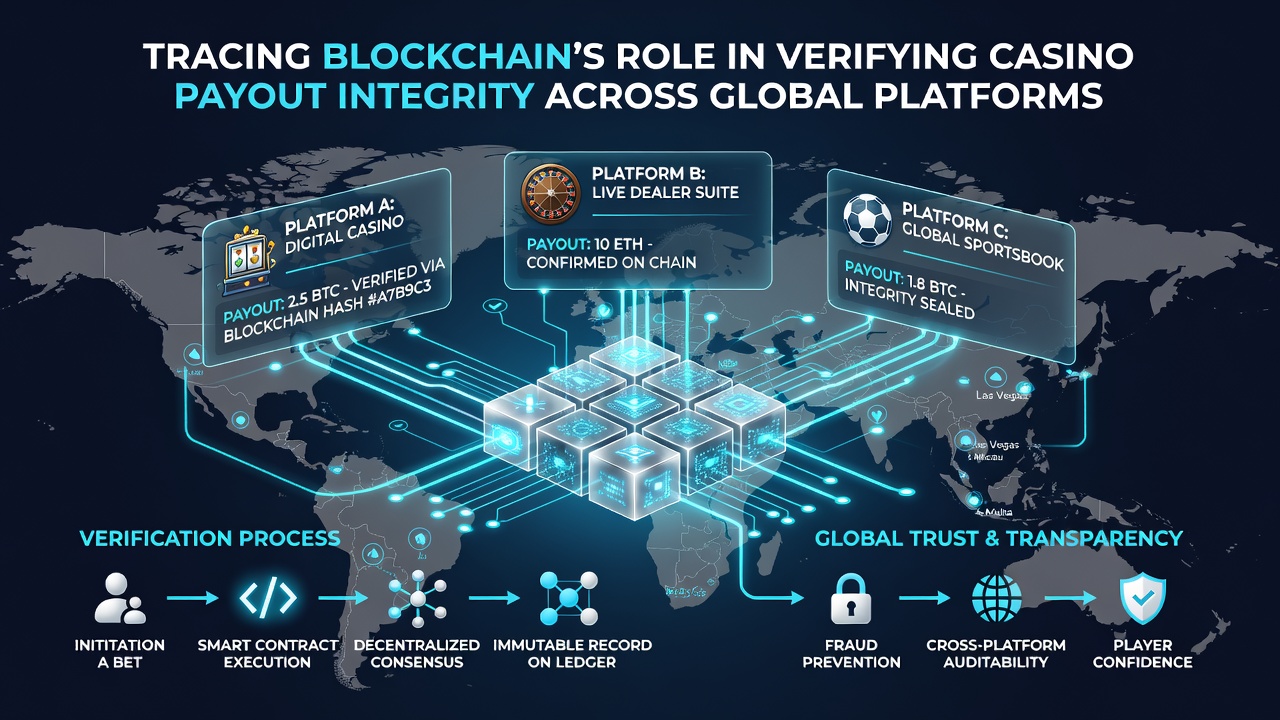
November 2026 saw several industry gatherings discuss expanded use of these ledgers, including sessions on standardizing data formats so that auditors from different countries could review the same transaction sets without custom conversion tools. Participants reviewed case studies where blockchain records helped resolve cross-border player complaints involving platforms licensed in multiple locations.
Technical Challenges and Integration Considerations
Scalability remains a noted factor because high-frequency gaming activity generates substantial data volumes that must be processed without introducing latency into player experiences. Some networks address this through layered architectures that keep detailed game logs on permissioned chains while anchoring summary hashes on public networks for broader verification. Energy consumption associated with certain consensus mechanisms has also prompted exploration of more efficient alternatives such as proof-of-stake variants tailored for enterprise use.
Integration with existing payment processors requires careful mapping of wallet addresses to player accounts while maintaining compliance with know-your-customer rules. Platforms that have completed these connections report that automated reconciliation scripts can flag anomalies for human review, reducing the manual workload during periodic audits.
Future Directions in Verification Standards
Industry groups and academic institutions continue to publish frameworks that outline best practices for implementing payout verification on blockchain infrastructure. These documents emphasize interoperability between different ledger types and the importance of maintaining cryptographic keys in secure environments managed by licensed operators. Observers note that continued refinement of these standards could support wider regulatory acceptance across additional markets.
Research indicates that combining blockchain records with real-time analytics tools allows operators to detect patterns that might indicate technical faults or attempted manipulation earlier in the transaction cycle. Such capabilities depend on clear data governance policies that specify which parties can access what portions of the ledger.
Conclusion
Blockchain applications in casino payout verification continue to evolve through collaboration between technology providers, operators, and regulatory bodies across several continents. The immutable nature of distributed ledgers provides a shared source of truth that supports both internal controls and external oversight. As implementation practices mature, the focus remains on aligning these tools with existing licensing frameworks while addressing technical and operational requirements specific to high-volume gaming environments.